‘Does Hamlet show that people in the 16th century thought just like us?’

hamlet

Although Hamlet is a rather complex tragedy, there are certainly concepts and questions that we are confronted with today. Religion has had a very large impact on the thought processes that differ between people in the 16th century, in comparison with people in the 21st century. 

Elizabethan’s most certainly had different preoccupations in comparison to present day. Queen Elizabeth I was a Protestant. She re-established the Church of England as the official church in England. Everyone had to attend their local church and there were laws about the type of religious services and the prayers which could be said, but Elizabeth did not ask about people’s real beliefs. This naturally meant that most people in the 16th century believed in the Christian concept of life after death, thus many lived by the laws of God, with the hopes of securing a place in Heaven. People in the 16th century were constantly reminded about life after death in the Elizabethan era, forcing them to consider their actions thoroughly. However, people in the 21st century are more open to the idea that there is no after-life, not even a God. New scientific discoveries and the recent revolution in technology has allowed many current minds to adjust to new concepts that fit more convincingly. Whilst Atheism was an insult in the Elizabethan era, it has become a far more accepted belief in the 21st century, creating a huge disparity in the thought processes of an Elizabethan person, in comparison to someone from the 21st century.

Hamlet shows that he has a “dread of something after death” which is something that many people nowadays still consider. What happens after death is still undiscovered, so people still fear the unknown like Hamlet did. He would not take his own life because of his uncertainty of the consequences. Hamlet cites the dreams he would suffer in this eternal sleep as another reason for his fears and uncertainty. Earlier in the play, even before the appearance of the Ghost, he wishes for an escape from his body and this world. Rather than a wish for suicide, though, it is a wish “that this too sallied flesh would melt, / Thaw, and resolve itself into a dew”. Since the Church dictates that suicide is a mortal sin, Hamlet hopes that, through no action of his own, his death will spontaneously occur. He understands the mystery of death well enough that he fears its uncertainty. Thus, death leads to his uncertainty and fear in living. People in the 21st century also fear the uncertainty of death, as it is still an idea that has not developed from technology and science. 

For instance, take the idea of revenge. Presently, we all dish out a bit of revenge here and there, as it is normal for people to want to seek vengeance and act upon it. This is partially due to the fact that in current England, there are more people who are atheists, meaning that less people are tied down by the expectations of God and the consequences that their revenge will deliver. However, as Hamlet displays through his reluctance and hindrance in taking revenge; he thinks about the consequences that this could have upon him after death. Being part of the Elizabethan society, Shakespeare is inclined to portray the significant impacts that sinning has on one’s life, or rather after-life. Hamlet demonstrates this typical 16th century preoccupation by finding it very difficult to kill Claudius when he has multiple opportunities presented to him, including the moment when Claudius is praying for his life. The attitude towards revenge is distinctively different between the two time periods, as a result of Queen Elizabeth’s heavy Christian influence on society, compared with today’s scientific development. 

Watching horror films is something people in the 21st century do for fun. Most, of course do not believe in ghost, mainly due to rational thinking and scientific explanations. However, Shakespeare’s England was much more superstitious than it is today. For instance, Catholics believed that after death, souls were sent to Heaven, Hell, or Purgatory. If souls were sent to Purgatory they were to work off their sins until they were allowed in Heaven. To Catholics, ghostly apparitions would be the souls of the dead now wandering earth until they had access to Heaven. Protestants did not believe in the existence of Purgatory, but they did concede that ghosts existed. However, they believed that these ghostly apparitions were demons, sent from Hell to seduce people into performing crimes or unholy acts. Just as Hamlet genuinely questions the trustworthiness of the ghost, so would Shakespeare’s audience. Some truly believed there were actual ghosts walking on earth, tempting souls to do evil. In the 21st century, most no longer believe in them, thus we would most probably think we were going crazy if we saw one, let alone submit to its demands. 

Hamlet shows that we have similar concerns to people in the 16th century, but different attitudes towards them as a result of the different rulers in the Time period, and also the progression of science and technology. As social structures change, so do the beliefs and normalities of the era; such as the attitudes towards revenge, ghosts and death. 
1504262904wpdm-9.jpg


‘Does Hamlet deserve to die in Shakespeare’s most infamous play?’

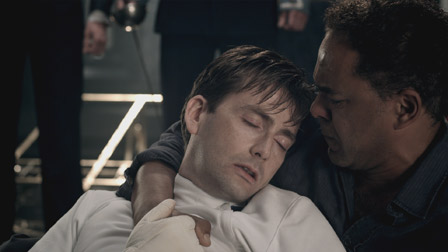
‘I am dead, Horatio’

lol

‘Hamlet’ is one of Shakespeare’s most tragic plays; as the characters appear to drop like flies. Most significantly, Hamlet, the main character perishes at the end of the play, leaving the audience questioning the justification of his morbid fate.


Vengeance and Internal conflict:

Hamlet is a character suffering from a lot of internal conflict, especially after the sudden death of his father, followed by the hasty marriage of his mother and uncle. Feeling very betrayed, this leaves Hamlet distraught and in a state of despair. Thus, the series of unfortunate events encourage the audience to feel sympathy towards him.

However, things begin to get interesting when the ghost of Hamlet’s father appears, informing Hamlet that it was his uncle that put the poison into his ear. Of course, this would spur desire within him to avenge his father’s death; which can be seen as the turning point whereby his fate becomes secured. As Edwardian’s believed revenge was a sin, it would ultimately send you to the depths of Hell. Thus, when Hamlet decides to take revenge, in doing so he becomes the cause of many deaths and essentially determines his fate; eternal life in Hell. Although, It must be noted that revenge is the instinctual human response to such an event, driven by grief, sorrow and anguish.

The hero’s downfall is caused by a flaw or blemish in his character. Hamlet ‘thinks too much’ and cannot make up his mind, and this resulting inaction leads to his death.

Hamlet has no control over his fate and destiny. Once the spring of his tragic narrative is released, it unwinds inevitably towards his conclusion. It seems apparent that Hamlet’s death is predetermined as he announces soon before his death that ‘there’s a divinity that shapes our ends’ – ‘Divinity’ suggesting that circumstance overpower our individual choices causing events to work out in unforeseen and perhaps negative ways. This therefore implies that death was always on the cards for Hamlet; especially when his desire to avenge the death of his father became his ambition. Revenge was irreligious in the 16th century, meaning that an original audience would condemn Hamlet’s actions, whereas a modern audience would be more sympathetic.

‘Hamlet’ is a typical Edwardian tragedy; containing an abundance of deaths, and few happy endings. Hamlet can be seen as a character that struggles with internal conflicts due to experienced peripeteia (a sudden reversal of fortune or change in circumstances – His father’s death and mother’s hasty marriage.), but he can also be deemed as a paragon; someone ‘too good’ for the world they live. Either, or support the idea that Hamlet’s fate was one that was needed in order t put his mind at rest.

Although these do not explain the justification of his death, they do insinuate that death was the only option for Hamlet, in order for his internal conflicts to be resolved.

However, Hamlet is the cause of many other deaths; Polonius’, Laertes, Claudius’, Rosencrantz, Guildenstern’s and arguably Ophelia’s and his mother’s. Although it could be argued that Claudius was the primary perpetrator that triggered all of these unfortunate deaths; it was Hamlet that carried out the revenge. He became obsessed with vengeance and lost sight of the people around him, causing havoc and chaos.

Ultimately, if Hamlet chose not to act on his revenge, and spared a thought about acting more rationally, the deaths that occurred, perhaps could have been avoided. It is clear that Hamlet had no intention of killing Polonius, but accidentally did so – however, it was his intention to kill the King. Furthermore, Hamlet showed a lot of remorse for Ophelia’s death; he bursts upon the company, declaring in agonized fury his own love for Ophelia. He leaps into the grave and fights with Laertes, saying that “forty thousand brothers / Could not, with all their quantity of love, / make up my sum”. So, although Hamlet was the cause of many deaths, he had no intention of killing anyone other than Claudius.

Nonetheless, as a result of his bad decisions, these tragedies occurred, causing heart ache and anguish amongst many characters. This brings us back to the question; ‘did Hamlet deserve to die?’ in which I would respond with the fact that his decisions were very influential towards his eventual doom, and his desire to take revenge was his critical falling point. However, I also believe that Hamlet was forced to endure a very troubled mind, shown by the madness he expresses throughout the play. He was essentially a victim of the corrupt court, which stimulated the corruption that permeated Hamlet’s internal state – which we gain insight to during his soliloquies (‘To be or not to be’ – life or death). Hamlet’s unstable state of mind penetrates the play and encourages the audience to feel sympathy for him and perceive his death as somewhat unwarranted and unfortunate, as his disposition was not his fault.

Conversely, others may be more inclined to believe that Hamlet’s death can be justified by his bad-decision making and his ultimate sinful desire to act upon revenge (which was his own choice). Although Hamlet initially falls victim to the actions in the court, he soon becomes ‘too much in the sun’ and very involved – causing more corruption led by his hot headed need for revenge. For instance when he kills Polonius, both Ophelia and Laertes are heart broken, which drives Ophelia to her death (along with Hamlet’s rejection) – this is similar to the response of Hamlet towards his own father’s death, however, this time Hamlet is the perpetrator, and shows little remorse.

Hamlet’s death can thence be justified as deserved fate due to his sinful actions, we are able to sympathise with him as his revenge is driven by grief and sadness, with no intention in killing innocent people. We can understand his feelings, as a modern audience especially and feel inclined to believe that he did not deserve to die simply because of his instinctual human emotions.

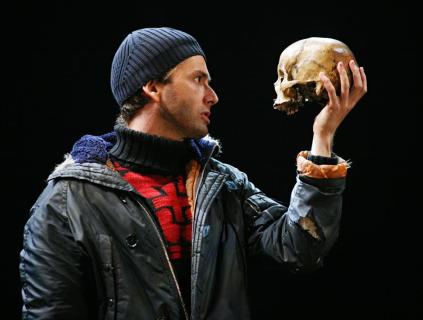
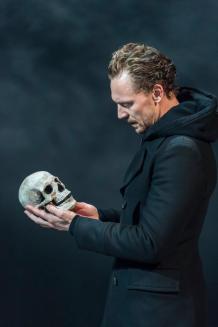
hamlet-_2008_ellie-kurttz-_c_-rsc_hamlet-hamlet271.tmb-img-912


#KeepingUpWithHamlet #KUWH