
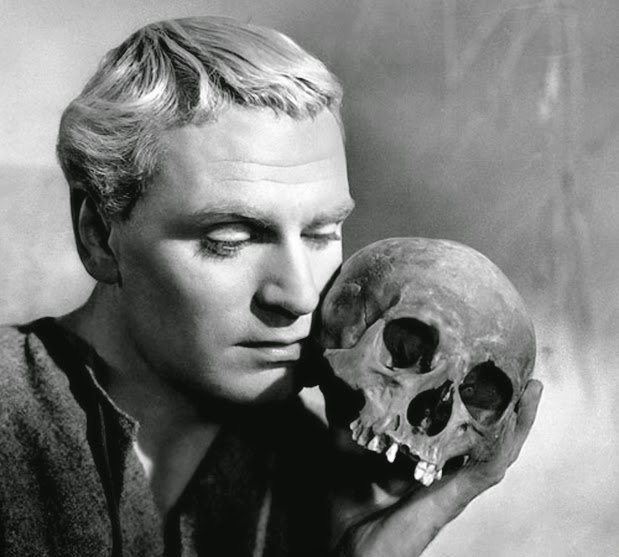
‘I am dead, Horatio’
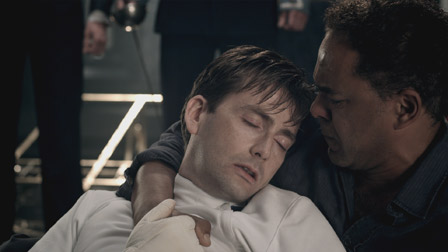
‘Hamlet’ is one of Shakespeare’s most tragic plays; as the characters appear to drop like flies. Most significantly, Hamlet, the main character perishes at the end of the play, leaving the audience questioning the justification of his morbid fate.
Vengeance and Internal conflict:
Hamlet is a character suffering from a lot of internal conflict, especially after the sudden death of his father, followed by the hasty marriage of his mother and uncle. Feeling very betrayed, this leaves Hamlet distraught and in a state of despair. Thus, the series of unfortunate events encourage the audience to feel sympathy towards him.
However, things begin to get interesting when the ghost of Hamlet’s father appears, informing Hamlet that it was his uncle that put the poison into his ear. Of course, this would spur desire within him to avenge his father’s death; which can be seen as the turning point whereby his fate becomes secured. As Edwardian’s believed revenge was a sin, it would ultimately send you to the depths of Hell. Thus, when Hamlet decides to take revenge, in doing so he becomes the cause of many deaths and essentially determines his fate; eternal life in Hell. Although, It must be noted that revenge is the instinctual human response to such an event, driven by grief, sorrow and anguish.
The hero’s downfall is caused by a flaw or blemish in his character. Hamlet ‘thinks too much’ and cannot make up his mind, and this resulting inaction leads to his death.
Hamlet has no control over his fate and destiny. Once the spring of his tragic narrative is released, it unwinds inevitably towards his conclusion. It seems apparent that Hamlet’s death is predetermined as he announces soon before his death that ‘there’s a divinity that shapes our ends’ – ‘Divinity’ suggesting that circumstance overpower our individual choices causing events to work out in unforeseen and perhaps negative ways. This therefore implies that death was always on the cards for Hamlet; especially when his desire to avenge the death of his father became his ambition. Revenge was irreligious in the 16th century, meaning that an original audience would condemn Hamlet’s actions, whereas a modern audience would be more sympathetic.
‘Hamlet’ is a typical Edwardian tragedy; containing an abundance of deaths, and few happy endings. Hamlet can be seen as a character that struggles with internal conflicts due to experienced peripeteia (a sudden reversal of fortune or change in circumstances – His father’s death and mother’s hasty marriage.), but he can also be deemed as a paragon; someone ‘too good’ for the world they live. Either, or support the idea that Hamlet’s fate was one that was needed in order t put his mind at rest.
Although these do not explain the justification of his death, they do insinuate that death was the only option for Hamlet, in order for his internal conflicts to be resolved.
However, Hamlet is the cause of many other deaths; Polonius’, Laertes, Claudius’, Rosencrantz, Guildenstern’s and arguably Ophelia’s and his mother’s. Although it could be argued that Claudius was the primary perpetrator that triggered all of these unfortunate deaths; it was Hamlet that carried out the revenge. He became obsessed with vengeance and lost sight of the people around him, causing havoc and chaos.
Ultimately, if Hamlet chose not to act on his revenge, and spared a thought about acting more rationally, the deaths that occurred, perhaps could have been avoided. It is clear that Hamlet had no intention of killing Polonius, but accidentally did so – however, it was his intention to kill the King. Furthermore, Hamlet showed a lot of remorse for Ophelia’s death; he bursts upon the company, declaring in agonized fury his own love for Ophelia. He leaps into the grave and fights with Laertes, saying that “forty thousand brothers / Could not, with all their quantity of love, / make up my sum”. So, although Hamlet was the cause of many deaths, he had no intention of killing anyone other than Claudius.
Nonetheless, as a result of his bad decisions, these tragedies occurred, causing heart ache and anguish amongst many characters. This brings us back to the question; ‘did Hamlet deserve to die?’ in which I would respond with the fact that his decisions were very influential towards his eventual doom, and his desire to take revenge was his critical falling point. However, I also believe that Hamlet was forced to endure a very troubled mind, shown by the madness he expresses throughout the play. He was essentially a victim of the corrupt court, which stimulated the corruption that permeated Hamlet’s internal state – which we gain insight to during his soliloquies (‘To be or not to be’ – life or death). Hamlet’s unstable state of mind penetrates the play and encourages the audience to feel sympathy for him and perceive his death as somewhat unwarranted and unfortunate, as his disposition was not his fault.
Conversely, others may be more inclined to believe that Hamlet’s death can be justified by his bad-decision making and his ultimate sinful desire to act upon revenge (which was his own choice). Although Hamlet initially falls victim to the actions in the court, he soon becomes ‘too much in the sun’ and very involved – causing more corruption led by his hot headed need for revenge. For instance when he kills Polonius, both Ophelia and Laertes are heart broken, which drives Ophelia to her death (along with Hamlet’s rejection) – this is similar to the response of Hamlet towards his own father’s death, however, this time Hamlet is the perpetrator, and shows little remorse.
Hamlet’s death can thence be justified as deserved fate due to his sinful actions, we are able to sympathise with him as his revenge is driven by grief and sadness, with no intention in killing innocent people. We can understand his feelings, as a modern audience especially and feel inclined to believe that he did not deserve to die simply because of his instinctual human emotions.
#KeepingUpWithHamlet #KUWH
 Keeping up with Hamlet